Why Commercial Kitchens Attract Ants
Commercial kitchens provide everything ants need: warmth, moisture and food. The warmth comes from cooking equipment running for long hours. The moisture comes from washing, steam and drainage. The food comes from traces left behind on surfaces, under equipment, in drainage channels and around waste areas, regardless of how clean the kitchen looks. Even a well-run kitchen has residues in the places that don’t get cleaned during a regular shift.
Ants are remarkably good at detecting these traces from a distance. A foraging worker ant that finds a food source returns to the colony and lays a chemical trail back to it and within a short time the trail becomes a constant stream. Food environments attract a wider range of food pests than most businesses account for, but ants are among the most consistently present because the conditions that commercial kitchens create are almost ideal for them.
Black Ants and Pharaoh Ants in Commercial Kitchens
Not all ants behave the same way or respond to the same treatments. In UK commercial kitchens, two species are responsible for the vast majority of problems and telling them apart matters.
Black Garden Ants in Commercial Kitchens
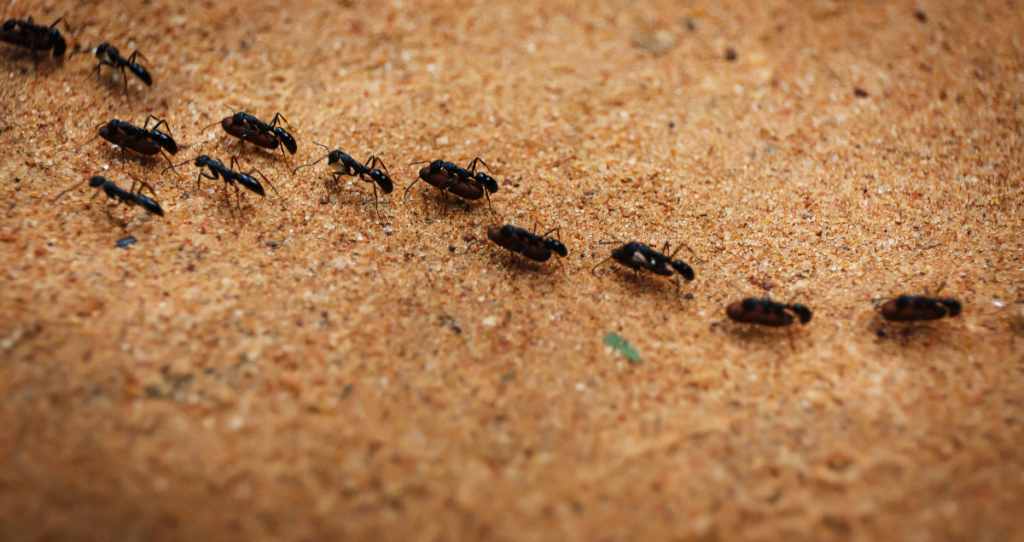
The black garden ant is the most common ant in the UK. It nests outdoors, typically in soil, under paving, or in wall cavities and forages indoors in search of food and water. It’s most active in spring and summer, when worker ants leave the colony to forage across large areas. In a restaurant kitchen or food preparation environment, these ants enter through gaps around doors, pipes and air bricks, following trails to wherever food is available.
Black garden ants don’t carry disease in the way that rodents or flies do, but their presence in a food environment is still a hygiene concern. They travel across floors, drains and surfaces before reaching food or prep areas and their presence during a pest control inspection or audit is recorded as a pest sighting regardless of species.
Pharaoh Ants in Commercial Kitchens
The pharaoh ant is a very different problem and considerably more serious in commercial kitchen environments. Pharaoh ants are tiny, pale yellow and live entirely indoors. They don’t forage from an outside nest. They nest inside the building, in wall voids, behind skirting boards, under appliances, inside electrical equipment and anywhere else that provides warmth and shelter.
Pharaoh ants are associated with food contamination in healthcare and catering environments and are capable of accessing packaged food. They move through buildings along pipe runs and electrical wiring, which means an infestation in one part of a building can spread to others without any visible trail on the surface. They’re also significantly harder to eliminate because of how they respond to treatment, which is covered in more detail below.
How to Prevent Ants in a Commercial Kitchen
Prevention in a commercial kitchen is about removing the conditions that make the space attractive to ants in the first place. No single measure is sufficient on its own, but together they significantly reduce the risk.
Cleaning Behind and Under Equipment
Standard cleaning routines don't typically reach behind large appliances, under fryers, or beneath refrigeration units and these are precisely the areas where food residue accumulates. Regular deep cleaning that covers these spaces removes the food traces that ants are detecting from outside the building. Any spill, residue, or grease build-up that isn't cleaned up becomes a food source for ants and other pests commonly found in commercial kitchens.
Drain Maintenance
Drains are one of the most consistent entry points and foraging areas for ants in commercial kitchens. Organic material builds up in drain channels and traps over time, providing both food and moisture. Regular drain cleaning and maintenance, including checks that drain covers are intact and correctly fitted, reduces this as an attractant and closes off a common access route.
Sealing Entry Points
Ants can enter through very small gaps. Cracks around pipe runs, gaps under exterior doors, damaged air bricks and poorly fitted seals around cables and conduits all provide access. A walk around inspection looking specifically for these gaps, followed by appropriate sealing, is one of the most cost-effective prevention steps available. In an industrial kitchen or large food production facility, the number of potential entry points is greater, making this check more important rather than less.
Waste Management and Bin Areas
Bins positioned close to the building, particularly those without tight-fitting lids, act as a consistent food source for ants foraging from the surrounding area. Moving bin storage away from the building, ensuring lids are always closed and keeping the surrounding area clean significantly reduces the draw for outdoor colonies. Internal bins should be emptied at the end of every service and cleaned regularly to prevent residue build-up inside.
Why DIY Ant Treatment Can Make the Problem Worse
This is the most important point in the blog for anyone managing a commercial kitchen with a pharaoh ant problem. Insecticidal sprays and aerosols, the type available from general retailers, cause pharaoh ant colonies to split. When a pharaoh ant colony detects a threat, it breaks into smaller groups and moves to new locations within the building. This is known as budding and the result is that a single infestation in one area becomes multiple infestations in several areas.
For black garden ants, a surface spray may suppress visible activity for a short period. It won’t address the colony, which remains outside and continues sending ants in. Gel baits carried back to the colony by worker ants are more effective for black ants and are the only appropriate treatment for pharaoh ants. Identifying which species is present before treating is essential, which is another reason why professional assessment is worth seeking before any treatment is applied.
Ants in a Commercial Kitchen Are a Compliance Risk
For any food business, whether a restaurant, a catering operation, or a food manufacturer, ants on site during an Environmental Health inspection or a BRC audit are recorded as a pest finding. The impact depends on the severity and the evidence of what measures are in place, but any active pest activity in a food preparation or storage area is a significant finding.
The Food Safety Act 1990 and associated food hygiene regulations require food businesses to take all reasonable precautions to protect food from contamination. Ants crossing prep surfaces, entering food storage areas, or appearing in a restaurant kitchen during service all represent a potential failure of that duty. A professional pest management programme, with documented inspections and evidence of proactive control measures, is the most reliable way to demonstrate compliance.
When to Call a Professional Pest Controller
If ants are already visible in a commercial kitchen, or if the same trails are appearing repeatedly despite cleaning and proofing measures, it’s time to bring in professional help. A pest controller will identify the species, locate the likely nest site or entry point and apply the right treatment for the situation. For pharaoh ants in particular, professional treatment is not optional. DIY products will make the problem worse.
MJ Backhouse Pest Control provides commercial pest control across Yorkshire, covering restaurant pest control, food production, hospitality and commercial kitchen environments. The common pests in commercial kitchens blog covers ants alongside the other pest risks that commercial kitchens most commonly face and is definitely worth reading alongside this one.
Getting on top of ants in a commercial kitchen comes down to understanding what’s drawing them in and responding correctly once they’re there. The two species most likely to cause problems in UK kitchens behave very differently and the gap between the right and wrong treatment approach is significant, particularly with pharaoh ants where an incorrect product can turn one problem into several.
MJB Pest Control has been working with food businesses across Yorkshire for over 35 years. To arrange a survey or put a prevention programme in place, call 0800 542 6359 or get in touch with the team today.
Contact us
If you’re looking for a professional and dependable pest control partner for your business, MJB Pest Control is here to help. Contact us today to discuss your specific needs and find out how we can help keep your premises pest-free.
Related articles
View all articles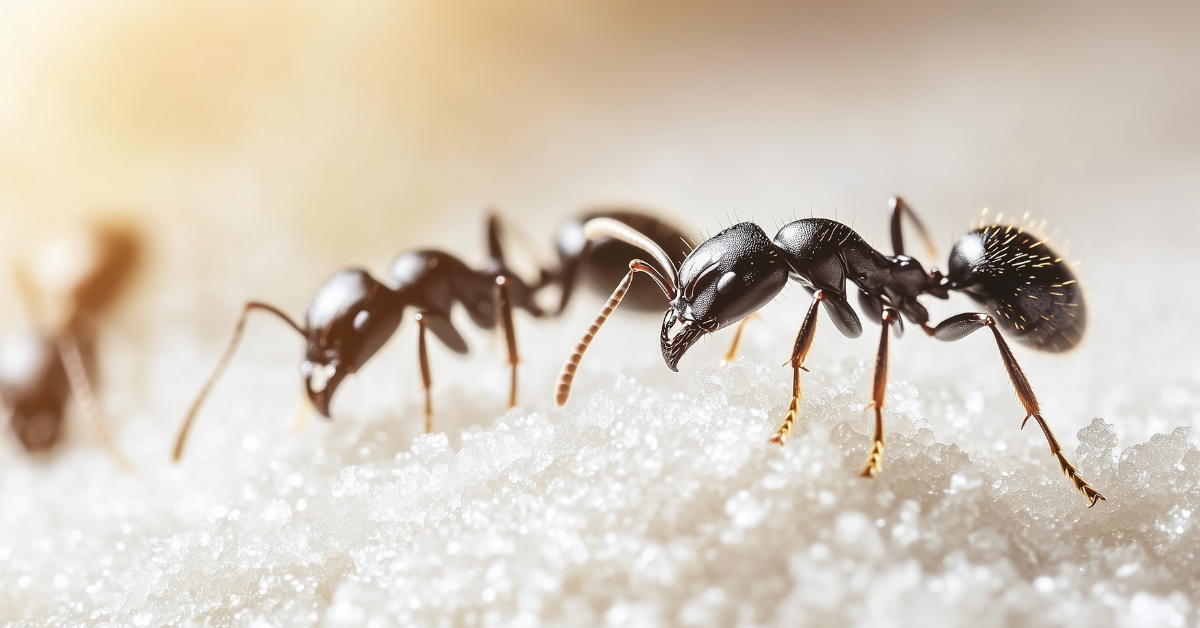


Why Outdoor Dining Areas Are Harder to Keep Pest-Free
Every outdoor dining space gives pests what they need: food, water, shelter and warmth. The difference between a terrace and a commercial kitchen is that a kitchen can be sealed, cleaned and checked properly. An outdoor area can’t be sealed at all and keeping on top of it during a busy service is much harder. Food dropped under tables, spills on the floor, build-up in drains and bins nearby all add up over the course of a day.
In Yorkshire, pest activity peaks from late spring through to early autumn. Wasps, flies, ants, birds and rodents all become much more active in the warmer months. A restaurant or café that keeps its kitchen well managed can still run into serious problems outdoors if the two areas aren’t treated as part of the same plan.
Managing Wasps Around Outdoor Seating
Wasps cause more disruption to outdoor dining than any other pest from June through to September. A single wasp near a table is an annoyance. A nest close by is a real operational and safety problem. Nests are most commonly found in eaves, roof spaces, garden walls, soil banks and trees near buildings. A nest that starts in spring with a handful of workers can hold tens of thousands by August.
Wasp behaviour changes as summer goes on. Early in the season, they’re out looking for food to bring back to the young in the nest. By late summer, with the nest winding down and no young to feed, they’re drawn almost entirely to sweet food and drink. This is when outdoor seating areas see the most wasp activity and when stings are most likely. Treating a nest early, while it’s still small, is far simpler than dealing with a large colony during peak service. It’s also worth knowing that wasps, bees and hornets need different treatment approaches, so identifying which one you’re dealing with matters before doing anything. For venues wanting to get ahead of the season, we have a couple of useful resources on when wasp activity typically peaks and the practical steps that reduce the risk of nests establishing nearby.
Flies and Outdoor Food Service
House flies, bluebottles and fruit flies show up consistently around outdoor food and drink. They’re drawn to food left on tables, sweet drinks, spilled sauces and anything building up in nearby drains or bins. In a restaurant or café, fly activity around outdoor tables isn’t just unpleasant for guests. It creates a real risk of food contamination and it can affect the outcome of an inspection.
Bins too close to outdoor seating are one of the most common reasons fly problems develop during summer. A bin taking food waste from a busy service gives flies somewhere to breed and from there they move freely between the bin and the tables. Keeping bins as far from seating as the site allows, making sure lids fit properly and emptying them regularly during service makes a significant difference. Where outdoor service runs close to a kitchen door, electric fly killers in the right positions provide an extra layer of protection.
Bird Activity Around Outdoor Dining Areas
Pigeons, sparrows and seagulls are all a persistent problem around outdoor food service in Yorkshire. Sparrows and feral pigeons are found across the whole county. Seagulls have spread significantly inland over recent years and are now a regular problem in city and town centres including Leeds, York and Bradford through the summer months. All three are drawn in by the same things: food dropped by guests, tables left uncleared and accessible bins.
Birds around outdoor seating create several problems at once. Droppings on tables, chairs and surfaces are a hygiene risk and a guest experience problem. They also make paving slippery, which is a safety hazard. Birds that start getting fed reliably from a spot quickly become bolder and harder to shift, which is why dealing with the problem early is far easier than waiting until they’ve settled in. Bird proofing and netting can protect covered structures, pergolas and canopies where birds are roosting or nesting.
Ants on Outdoor Terraces and Patios
Ants are active from spring through to September and are a consistent problem around outdoor dining. Cracks in paving and decking, gaps between slabs, nearby flower beds and disturbed soil all give them somewhere to nest and feed. Once they find a food source, a trail forms quickly and is hard to break without dealing with the colony itself.
For outdoor dining areas, ants on tables or crossing surfaces where food is being served are a hygiene concern for both guests and inspectors. Keeping outdoor surfaces clear of food, filling gaps in paving and managing planted beds close to the seating area all reduce the conditions that attract them. Where a trail or nest is already established, professional treatment is far more effective than anything available over the counter.
Rats and Mice Around Outdoor Dining and Bin Areas
Rodent activity around outdoor dining areas tends to happen after hours, when the space is quiet and undisturbed. Food dropped under tables during service, build-up in outdoor drains and the smell of food waste from nearby bins all draw rats and mice in overnight. Yorkshire’s mix of city centres and semi-rural areas means pressure from rats in surrounding land, drainage runs and nearby properties is a consistent issue for outdoor food businesses.
Any evidence of rodent activity in an outdoor area, whether that’s droppings, gnaw marks on furniture or fencing, or actual sightings, is treated seriously during a food hygiene inspection. It carries the same weight as finding the same signs indoors. Keeping the outdoor area covered as part of a commercial pest control contract is the most reliable way to stay on top of the problem year round.
Practical Steps to Keep Outdoor Dining Areas Pest-Free
Waste Management and Bin Placement
Where you put your bins matters more than almost anything else for outdoor pest management. Bins taking food waste should be as far from the seating area as the site allows, with tight-fitting lids and emptied regularly during and after service. The inside of bins should be cleaned frequently to stop residue building up between collections. A clean bin area well away from the tables removes one of the main things drawing in flies, wasps, birds and rodents at the same time.
Drainage and Standing Water
Outdoor drains and drainage channels fill up quickly during a busy service. Blocked or poorly maintained drains give flies somewhere to breed and any standing water near the seating area will attract wasps when the weather is warm. Adding drain cleaning to the end-of-service routine goes a long way towards keeping flying insects under control through the season.
Checking the Structure at the Start of the Season
Covered outdoor areas, pergolas and canopies create warm, sheltered spots that wasps and birds will move into if they’re left unchecked. A walkround at the start of the season to look for gaps in covered structures, likely nest sites in eaves or roof joints and any spots where birds are already roosting gives the chance to deal with problems before they establish. Bird netting on covered outdoor structures is a practical long-term fix for venues where birds are a regular problem.
Table Clearing During Service
How quickly tables are cleared between sittings has a direct effect on how many pests turn up during service. Food left on a table on a warm day attracts wasps and flies within minutes. Getting tables wiped down promptly, keeping condiments and sauces stored away when not in use and keeping the seating area as clear as possible during service all reduce what’s drawing pests in throughout the day.
Why Pest Activity Outdoors Still Counts at Inspection
Food businesses in Yorkshire that serve food outdoors are covered by the same food hygiene regulations as inside the premises. Pest activity in an outdoor service area can be recorded during an Environmental Health inspection and carries the same weight as a finding indoors. It can also affect the food hygiene rating, which is publicly displayed and has a direct effect on bookings and footfall.
For restaurants, pubs, cafés and hotel food operations across Yorkshire, MJB provides pest control that covers outdoor and indoor areas together, with monitoring and documentation that holds up under both routine inspections and third-party audits. Businesses in the food sector with outdoor service areas should make sure any pest control contract explicitly covers the outdoor space rather than assuming it’s included.
Pest Control for Outdoor Dining in Yorkshire
Managing pests around outdoor dining isn’t the same as managing them inside a building. The picture changes with the season, shifts with the weather and involves species that move freely between indoors and out. At MJ Backhouse Pest Control, we work with food and hospitality businesses across Yorkshire, covering Leeds, York, Bradford, Wakefield, Harrogate, Hull, Doncaster and the surrounding area. Before signing with any provider, it’s worth knowing what to ask to make sure the service fits what your business needs.
Managing pests in an outdoor dining area is a different challenge from managing them inside a building. The space can’t be sealed, the conditions change with the weather and the same things that make a terrace or beer garden appealing to guests make it appealing to wasps, flies, birds and rodents too. Getting the basics right with waste, drainage, table clearing and structure checks keeps the problem manageable through even the busiest part of the season.
MJB Pest Control has been working with food and hospitality businesses across Yorkshire for over 35 years. To put a restaurant pest control programme in place that covers your outdoor dining area, call 0800 542 6359 or contact our team today.
Contact us
If you’re looking for a professional and dependable pest control partner for your business, MJB Pest Control is here to help. Contact us today to discuss your specific needs and find out how we can help keep your premises pest-free.
Related articles
View all articles

Why New Restaurants Are Particularly at Risk From Pests
A brand new or recently refurbished restaurant kitchen carries a specific set of pest risks that an established site doesn’t face in quite the same way. The building has been disturbed, the infrastructure is untested in a real operating environment and food is arriving in volume for the first time. Each of these creates an opening for common food pests to establish before the business has the systems in place to catch them early.
Pests Attracted During Construction and Refurbishment
Construction and refurbishment work disturbs soil, opens wall cavities and creates gaps around new pipework, ducting and drainage. Rodents in particular are drawn to building sites and the disruption they create and it’s common for rats or mice to enter a building through openings left during the fit-out phase that are never properly sealed before the kitchen becomes operational. Debris and construction materials left on site also provide temporary harbourage for rodents, cockroaches and other insects before the building is fully cleaned out.
Pests Arriving in Deliveries
The first food and equipment deliveries to a new commercial kitchen carry their own risk. Cardboard packaging is a well-documented route for cockroach eggs into food environments. Stored product insects arrive in dry goods, cereals, flour and spices that can already be lightly infested before they leave the supplier. A new restaurant accepting its first large deliveries without any monitoring in place has no way of knowing whether food pests have arrived with the stock.
What a Pre-Opening Pest Control Survey Involves
A pre-opening pest survey is a structured inspection of the building carried out before the kitchen starts operating. A pest control technician assesses the structure for entry points, checks drainage, examines any areas of concern from the construction phase and looks for any evidence of rodent, insect, or bird activity from the build period.
The survey produces a written report that documents the condition of the building at opening, identifies any proofing work that needs doing and recommends the monitoring and treatment programme appropriate for the site. This document matters beyond the immediate practical value. It creates a record that demonstrates due diligence from day one, which is relevant to both Environmental Health registration and any future audit or inspection. Understanding what happens during a commercial pest control inspection gives a clearer picture of what the ongoing inspection process looks like once the restaurant is open.
The Most Common Pests Found in New Restaurant Kitchens
The pests in commercial kitchens that cause the most problems in a new site fall into four main categories. Each arrives through a different route and needs a different response.
Rodents
Rats and mice are the most common consequence of inadequately proofed entry points during a fit-out. They enter through gaps around pipe runs, under doors, through drainage openings and through any void in the building fabric that wasn't sealed during construction. Once inside, they nest in wall cavities, under equipment and in any undisturbed space that offers warmth and shelter. A rodent sighting or evidence of activity in a restaurant kitchen before or after opening is a serious hygiene finding
Cockroaches
Cockroaches are most commonly introduced through incoming deliveries rather than through structural entry points. They thrive in the warm, humid conditions of a commercial kitchen and are notoriously difficult to eliminate once established, reproducing quickly and hiding in cracks, behind appliances and inside electrical equipment. German cockroaches in particular are a significant risk in new catering environments because a small number introduced with equipment or packaging can become a serious infestation within weeks. For a broader look at what else turns up in catering environments, our common pests in commercial kitchens blog covers the full range alongside cockroaches.
Stored Product Insects
Beetles, weevils and moth larvae that infest dry goods are a consistent risk in any new food business taking in its first stock deliveries. These insects are often present in low numbers in incoming goods and go undetected until the infestation becomes visible. Monitoring with pheromone traps in the dry goods store from day one gives early warning of any activity before it spreads to other stock. The species most likely to arrive this way and how to spot them early, are covered in the stored product insects guide.
Flies
Drainage is one of the most common sources of fly problems in a new restaurant kitchen. Drain flies breed in the organic film that builds up in pipework and a new drainage system that isn't cleaned and maintained from the outset can develop a fly problem quickly once the kitchen starts producing food waste. Fruit flies are drawn to any fermentation or organic residue in waste bins, floor drains and beverage storage areas. Fly screens on opening windows and doors, regular drain cleaning and electric fly killers positioned correctly within the kitchen are among the most straightforward preventative measures available.
Why Proofing Is Easier Before the Kitchen Is Operational
Structural proofing work, including sealing gaps around pipes, securing drain covers and addressing openings in the building fabric, is significantly easier to carry out before the kitchen is fully fitted and operational. Once large appliances are installed and in daily use, access to the areas behind and underneath them becomes limited. Work that takes an hour in an empty kitchen can take half a day in a working one, with the additional disruption of needing to suspend operations.
Getting the proofing right at the pre-opening stage also means the building starts operating with a clean record. There are no historical entry points to address, no established routes that rodents or insects are already using and no infestation to eliminate before the preventative measures can take effect. Anyone working through what needs to happen before a first treatment can find a practical checklist in our premises preparation guide.
Setting Up a Pest Control Contract Before You Open
Do restaurants have to have pest control? Legally, food hygiene regulations require all food businesses to take all reasonable precautions to prevent pest contamination. In practice, Environmental Health officers expect to see evidence of a pest management programme in place and a contracted pest control provider is the clearest way to demonstrate that. Having a contract from day one means inspections are documented from the point the business opens, which carries considerably more weight than trying to establish a service record after a problem has been identified.
A pest control contract for a new restaurant or hospitality business typically covers regular site visits, monitoring station checks, documentation of any findings and treatment as required. The frequency depends on the type of business and its risk profile. A high-volume restaurant kitchen handling raw meat, fish and produce will typically require more frequent visits than a lower-risk catering environment.
Food Hygiene Ratings and Environmental Health Inspections
New food businesses in England, Wales and Northern Ireland are required to register with their local authority before opening and will receive a visit from an Environmental Health officer, usually within the first few months of trading. The food hygiene rating scheme assessment covers food handling practices, premises condition and management systems, all of which are affected by pest control.
A pest control contract, a pre-opening survey report and evidence of proofing work all contribute positively to the management systems element of the rating. A poor rating is publicly visible and can have a direct effect on trade. For any restaurant pest control programme, starting with documented evidence of a professional approach before the first inspection is the strongest position to be in. For businesses that may also be working towards third-party accreditation, our BRC audit pest control checklist covers what auditors look for in food business pest management records.
What to Look for in a Pest Control Provider
Not all pest control providers have the same experience with food business environments and the requirements of pest control in restaurants are different from those of a general commercial contract. It’s worth asking prospective providers whether they have experience with food businesses specifically, whether they’re familiar with the documentation requirements of Environmental Health inspections and what their response time is for urgent call-outs. A pre-opening meeting to walk through the site before any contract is signed gives a clear picture of whether the provider understands the specific risks of the premises. The questions to ask your pest control provider covers the key points worth raising before committing to a contract. Before signing anything, it’s worth knowing the right questions to ask a pest control provider to make sure they’re the right fit for a food business environment.
Getting pest control in place before a new restaurant opens removes a category of risk that’s much harder and more disruptive to manage once the kitchen is operational. A pre-opening survey, structural proofing, a pest control contract and documented monitoring from day one put the business in the strongest possible position for its Environmental Health inspection and create a clear record that demonstrates a proactive approach from the start.
MJB Pest Control has been working with food businesses and restaurants across Yorkshire for over 35 years. To arrange a pre-opening survey or set up a restaurant pest control contract ahead of your launch, call 0800 542 6359 or contact the team.
Contact us
If you’re looking for a professional and dependable pest control partner for your business, MJB Pest Control is here to help. Contact us today to discuss your specific needs and find out how we can help keep your premises pest-free.
Related articles
View all articles
Why Are Commercial Properties More at Risk from Bed Bug Infestations?
Bed bugs spread through movement. They hitchhike on luggage, clothing, furniture and personal belongings, which means any environment with a high volume of people coming and going is at elevated risk. Hotels are the most obvious example, but the same logic applies to care homes, student accommodation, hostels, rental properties and any building where rooms are shared or turned over regularly.
The challenge for commercial operators is that once a bed bug infestation takes hold in a multi-room building, it rarely stays contained. Bed bugs can travel through wall cavities, under doors and along shared pipework, which means an infestation in one room can spread to neighbouring ones before anyone has noticed the original problem. Understanding where bed bugs come from and how they move through a building is an important part of knowing how to respond when they’re found.
How Do You Know If Your Commercial Property Has a Bed Bug Problem?
The earliest signs of a bed bug infestation are often easy to overlook, particularly in commercial settings where rooms are cleaned and turned over quickly. Knowing what to look for and making sure the right people are checking, is what allows a problem to be caught early rather than after it’s already spread.
The most common indicators include:
- Bite marks on guests or residents, typically appearing on exposed skin such as arms, legs and neck after sleeping
- Dark staining on mattresses, bedding, or nearby surfaces, which appears as small dark spots
- Reddish-brown staining on sheets or pillowcases that appears without an obvious cause
- Shed skins left behind as bed bugs progress through their life cycle
- A faint sweet almond smell in heavily infested rooms, which is a distinctive sign of a significant infestation
- Visible bugs in seams of mattresses, behind headboards, in skirting board gaps, or around electrical sockets
Staff in hospitality settings should know how to carry out a basic room inspection, particularly when guests report unexplained bites or when rooms have had complaints.
How Does Bed Bug Heat Treatment Work?
Bed bug heat treatment works by raising the temperature of an affected area to between 49°C and 60°C, which is lethal to bed bugs at every stage of their life cycle, including eggs. Specialist heating equipment is used to bring the entire space up to and maintain that temperature for long enough to ensure full penetration into furniture, flooring, wall voids and other areas where bugs and eggs are likely to be hiding.
The critical advantage of heat is that it reaches places chemical treatments can’t. A bed bug hidden deep inside a mattress, tucked into a wall cavity, or sheltering inside a piece of furniture will be reached by heat in a way it simply wouldn’t be by a surface-applied insecticide. Effectiveness for bed bug heat treatment is consistently cited at between 95% and 100%, compared to around 70% for a standard chemical treatment for bed bugs. Most heat treatments are completed in a single day, with no chemical residue left behind and minimal waiting period before the room can be used again.
What Heat Treatment Means for Commercial Disruption
For a commercial operator, minimising downtime is as important as resolving the infestation. A single-visit treatment that leaves no residue and requires no follow-up is considerably less disruptive than a multi-visit chemical programme spread over several weeks. That practical advantage, combined with the higher effectiveness rate, is why bed bug heat treatment has become the preferred method for hospitality and healthcare settings where room availability and hygiene standards are both critical.
Why Heat Treatment Works So Well for Commercial Bed Bug Control
Heat kills bed bugs at every life stage in a single treatment. That’s the core reason it’s become the preferred method for commercial settings where repeat visits or residual infestations aren’t an acceptable outcome. Chemical treatments can leave eggs unaffected, which means a population can re-establish itself after treatment even when adult bugs have been killed. Heat eliminates that risk by dealing with every stage simultaneously.
There’s also no resistance risk with heat. As discussed later in this blog, bed bugs are developing resistance to certain chemical compounds, which reduces the reliability of chemical treatment over time. Heat is not subject to that variable, which makes bed bug heat treatment a consistently effective option regardless of the history of chemical use in the property.
For businesses with compliance obligations, the absence of chemical residue matters too. In healthcare environments, care homes and food service settings, the use of pesticides is closely regulated and the ability to return a space to normal use quickly without a residue period is a significant operational benefit. Commercial pest control for high-compliance settings increasingly defaults to heat for exactly this reason.
How Does Chemical Treatment for Bed Bugs Work?
Chemical treatment for bed bugs involves the application of insecticides to areas where bed bugs are known or likely to be present. The most commonly used compounds are pyrethrins and pyrethroids, applied as sprays, foams, or dusts to harborage areas including mattress seams, skirting boards, furniture joints and wall cavities. The treatment works by killing bugs that come into physical contact with treated surfaces.
One of the advantages of chemical treatment is its residual effect. Unlike heat, which kills on contact during the treatment session, chemical treatments continue to work after application, providing an ongoing barrier that can reduce the risk of re-infestation in the weeks following treatment. For a moderate, early-stage infestation, a well-applied chemical treatment carried out by a qualified technician can be effective, particularly where the infestation hasn’t yet spread beyond a clearly defined area.
Chemical treatment is also generally lower in cost than heat treatment, which makes it a consideration for smaller infestations or budget-constrained situations where the full heat treatment investment isn’t immediately justified.
When Does Chemical Treatment Make More Sense Than Heat?
There are situations where chemical treatment for bed bugs is the more appropriate choice and a good commercial bed bug control programme recognises both options rather than defaulting to one in every situation.
Early-Stage and Contained Infestations
When an infestation is caught early and is confined to a clearly defined area, chemical treatment applied by a professional technician can resolve the problem effectively without the cost or equipment requirements of heat. The key condition is that the infestation is genuinely contained. Once bed bugs have spread to multiple rooms or penetrated deeply into the fabric of a building, the limitations of chemical treatment become more significant.
As a Supporting Measure Alongside Heat
Chemical treatments can also play a supporting role within a heat treatment programme. In certain situations, particularly where inaccessible voids can't be directly reached by heat equipment, targeted chemical application can be used as a secondary measure to address areas the heat can't fully penetrate. In that context, the two methods complement each other rather than compete.
The Growing Problem of Bed Bug Resistance to Chemical Treatments
Resistance to pyrethrins and pyrethroids among bed bug populations is documented and growing. Bed bugs can develop a thickened cuticle, effectively a tougher outer skin, that limits the penetration of chemical compounds. Some populations have also developed metabolic resistance, breaking down the active compounds before they can cause harm. The result is that chemical treatments which would have been reliably effective a decade ago are producing increasingly inconsistent results in certain infestations.
This resistance is an established and well-documented problem that has led pest control professionals and regulators to reassess the long-term viability of pyrethroid-based treatments as a standalone solution. For commercial operators dealing with a recurring bed bug infestation, or one that hasn’t responded to a previous chemical treatment, resistance is a likely factor and bed bug heat treatment becomes the more reliable option.
Why Professional Bed Bug Treatment Is Essential for Commercial Operators
DIY bed bug products are widely available, but they rarely resolve a commercial bed bug control problem. Over-the-counter sprays typically contain the same pyrethroid compounds that bed bug populations are already developing resistance to and they’re applied without the thoroughness or equipment that professional treatment provides. More importantly, they don’t address the eggs, which means any infestation treated with a DIY product is likely to re-establish itself within weeks.
For a commercial property, the stakes are too high to take that risk. A professional inspection establishes the extent of the infestation, identifies the harborage areas and determines the most appropriate treatment method for the specific situation. Follow-up monitoring after treatment is what confirms the infestation has been fully resolved rather than temporarily suppressed. Professional bed bug pest control is also what provides the documented evidence that a problem has been properly addressed, which matters in regulated sectors where records of pest activity and treatment are subject to inspection.
Bed bug heat treatment and chemical treatment for bed bugs are both legitimate tools in commercial bed bug control, but they suit different situations. Heat is the more effective option for established infestations, multi-room spread and environments where residue, disruption and the risk of resistance are concerns. Chemical treatment has a role in early-stage or contained infestations and as a supporting measure alongside heat. What matters most is that the treatment is chosen based on a proper assessment of the infestation rather than defaulting to the cheapest or most convenient option, since the cost of getting it wrong in a commercial setting goes well beyond the price of a repeat treatment.
MJ Backhouse Pest Control provides professional bed bug pest control across Yorkshire, including Leeds, York, Harrogate and the surrounding areas. To arrange an inspection or discuss the right treatment approach for your property, get in touch with the team or call 0800 542 6359 as soon as possible.
Contact us
If you’re looking for a professional and dependable pest control partner for your business, MJB Pest Control is here to help. Contact us today to discuss your specific needs and find out how we can help keep your premises pest-free.
Related articles
View all articles

Every spring, searches for love bugs spike. People want to know what they look like, whether they bite and whether they exist in the UK. The lovebug is an interesting insect, but for UK businesses it is mostly a curiosity rather than a concern. What is worth paying attention to, though, is the broader pattern: as temperatures rise, flying insects become active and some of them are a serious problem for commercial premises.
What Are Love Bugs?
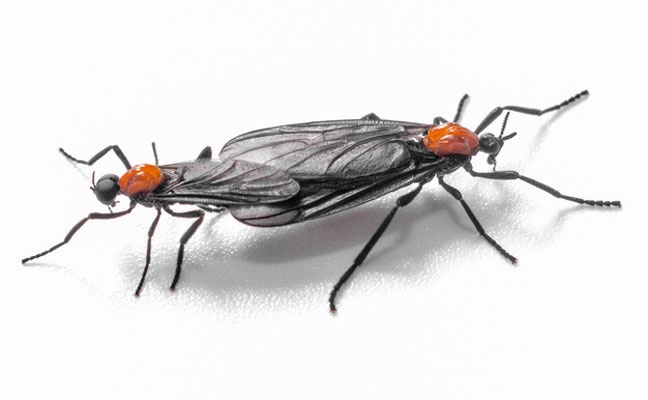
The lovebug (Plecia nearctica) is a type of fly found in Central America and the southeastern states of the US, particularly Florida, Texas, Louisiana, Alabama and Mississippi. It gets its name from the way it mates: once a male and female pair up, they stay joined end-to-end for up to several days, even while flying. That is also why they are sometimes called the double-headed bug or the honeymoon fly.
Love bugs are small, around 6 to 9mm long, with a black body and a red or orange patch just behind the head. They swarm twice a year, in spring and late summer and are most active during the middle of the day. Despite how dramatic the swarms look, they do not bite, do not sting and pose no health risk to people or animals.
For most of the year, the larvae live in the soil and feed on dead vegetation, which makes them useful to the environment. The main issue they cause is for drivers. Large swarms along highways leave windscreens and radiators covered in insects and the slightly acidic chemistry of dead love bugs can damage car paint if left on for too long.
Are Love Bugs Found in the UK?
No. Love bugs need the warm, humid conditions of the Gulf Coast to survive and breed. UK weather does not support them and there is no established population here. If you have come across the name during a search and wondered whether they are something to be concerned about, they are not.
That said, the lovebug story is a good illustration of what happens when flying insects find the right conditions. They multiply quickly, they appear in significant numbers and by the time people notice them it can already be a problem. That dynamic is very relevant in the UK, just with different species.
Are Love Bugs Found in the UK?
No. Love bugs need the warm, humid conditions of the Gulf Coast to survive and breed. UK weather does not support them and there is no established population here. If you have come across the name during a search and wondered whether they are something to be concerned about, they are not.
That said, the lovebug story is a good illustration of what happens when flying insects find the right conditions. They multiply quickly, they appear in significant numbers and by the time people notice them it can already be a problem. That dynamic is very relevant in the UK, just with different species.
The Flying Insects UK Businesses Should Be Watching For This Spring
As the weather warms up through spring and into summer, flying insect activity picks up noticeably across the UK. For commercial premises, particularly in food service, hospitality, healthcare, retail and warehousing, that means real pest pressure. The businesses that handle it best are the ones that have measures in place before the season starts, not after they have spotted a problem.
Cluster Flies Coming Out of Hibernation
Cluster flies spend winter hibernating inside buildings, usually in roof voids, wall cavities and the upper floors of properties near fields or open land. They don’t cause the kind of contamination risk that house flies do, but as temperatures rise through March and April they emerge in large numbers and that volume is the problem. For hotels, offices and any business with customer-facing spaces, a significant cluster fly emergence can be very difficult to manage quickly.
House Flies and Bluebottles in Food Businesses
House flies and bluebottles are the flying insects that create the most serious problems for food businesses. They carry bacteria including Salmonella, E. coli and Listeria, picking them up from waste and contaminated surfaces and dropping them onto food, equipment and preparation areas. So, these are a direct contamination risk with consequences that include failed Environmental Health inspections, improvement notices and in serious cases forced closure. For any premises handling or serving food, fly control is not something that can wait until flies are already visible. Electric fly killers, fly screens and proper waste management all need to be in place before the warm weather arrives.
Fruit Flies and Drain Flies in Catering and Hospitality
Fruit flies are tiny and easy to underestimate, but in a warm catering kitchen they reproduce fast enough for a small problem to become a visible infestation in a matter of days. They are drawn to anything fermenting or decomposing, including overripe fruit, residue in bins, spilled drinks and damp cloths. Getting on top of them properly means finding and removing every source, which is harder than it sounds.
Wasps Starting to Build Nests
Queen wasps come out of hibernation in early spring and start looking for a nest site straight away. By the time a wasp nest is causing obvious problems, usually mid to late summer, it can already hold thousands of workers. At that point, treatment is more complex, more disruptive and more urgent. For businesses with outdoor areas, food service, or delivery operations, a large active wasp nest is definitely operational and safety issue. Dealing with it earlier in the year, while the nest is still small, is considerably more straightforward. Our commercial pest control team covers wasp nest treatment across Yorkshire and can respond quickly when it is needed.
Why Flying Insects Are More Than Just a Nuisance for Businesses
A couple of flies in a warm office is annoying. In a commercial food environment, the same situation carries regulatory weight. Food businesses are inspected by Environmental Health officers and many are subject to third-party audits through bodies like the British Retail Consortium and SALSA. Evidence of fly activity during an audit or inspection, can affect certification, trading status and the ability to supply certain customers. MJB’s pest control for the food industry is built around exactly these compliance pressures.
The same applies well beyond food. Flying insects in a healthcare setting, a hospitality venue, or a retail premises all carry reputational consequences. A single incident visible to customers or auditors can cause more commercial disruption than a year of proactive pest control would have cost. For offices and other professional environments, the expectation from staff and visitors is the same… a clean, pest-free space.
Love bugs are not something UK businesses need to worry about, but the questions people ask about them every spring reflect a real pattern. Flying insects pick up as the weather warms and for commercial premises the consequences of getting caught out are often more serious than businesses expect. Cluster flies, house flies, fruit flies, drain flies and wasps all become active through spring and summer and dealing with them proactively is always cheaper and easier than reacting once a problem is established.
MJB Pest Control has been working with businesses across Yorkshire for over 35 years. To put a flying insect control plan in place before the season gets going, call 0800 542 6359 or get in touch with the team today.
Contact us
If you’re looking for a professional and dependable pest control partner for your business, MJB Pest Control is here to help. Contact us today to discuss your specific needs and find out how we can help keep your premises pest-free.
Related articles
View all articles
Local food source
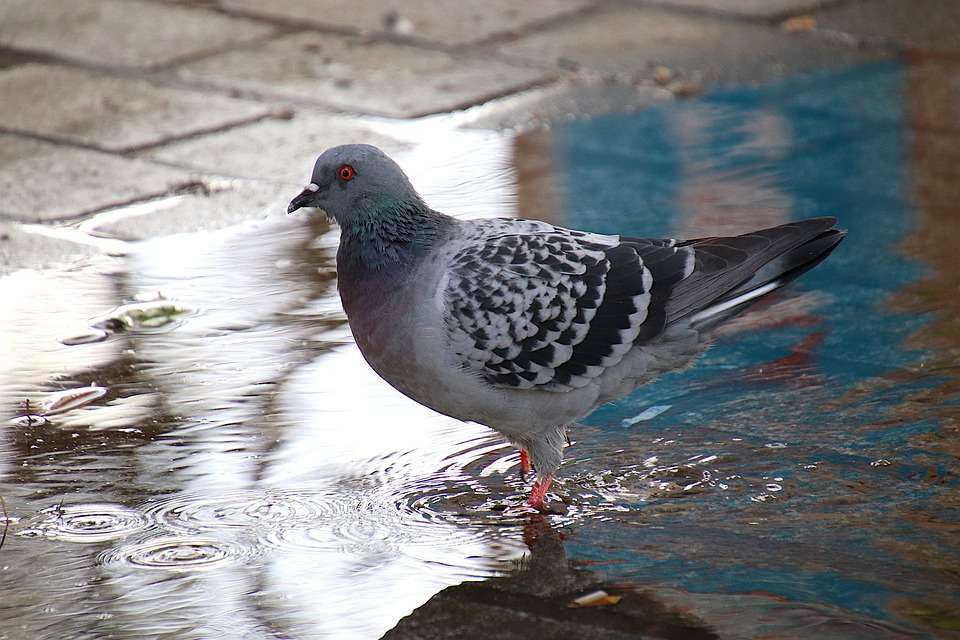
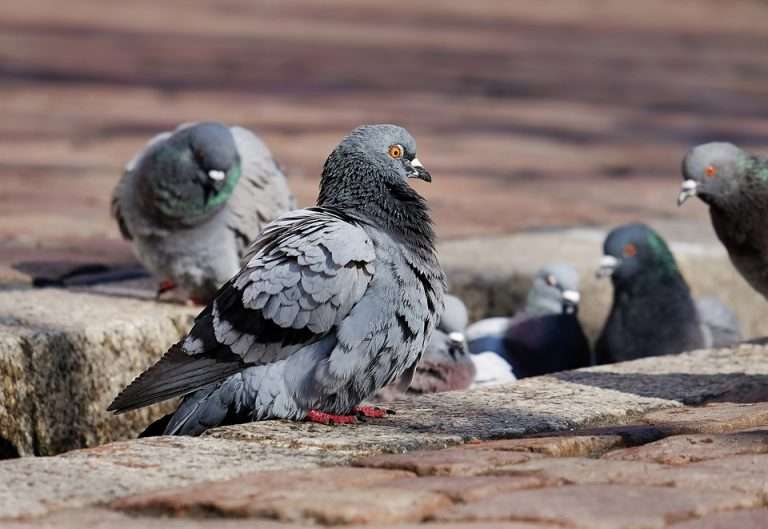
Pigeons will usually choose to roost in areas where there is a food source close by. Even if you haven’t seen any signs of bird activity yet, your property is more at risk if it’s located close to a potential food source such as a restaurant or café, or if there are open bins kept nearby.
Bird noises
A bird infestation can be very loud and you may hear the noise of birds landing and settling on roofs or bird cries- particularly if there are young chicks who may have a distinct cry.
Droppings
You might notice a concentrated amount of bird droppings (guano) in areas where birds roost. As well as the health risk guano can pose, bird excrement can also be damaging to your property. If you notice this is happening regularly or there is a build-up below potential perch areas, you might have a bird infestation.
Property damage
Pigeons in particular are known to seek out sheltered areas that are hard to reach to protect themselves and their chicks from predators. Because of these, they can cause damage to your property by moving loose roof tiles to fit into small gaps or nesting beneath solar panels.
Debris
Scattered nesting materials and bird feathers can cause damage by blocking guttering and drains so it’s important to check those areas if you notice nesting materials strewn around your property.
Where are pigeons nesting?
If you have the signs of a bird infestation but haven’t yet spotted where the birds are roosting, remember that pigeons prefer to build their nests in areas that are difficult to reach such as tall buildings, balconies, ledges and roof voids and can fit in gaps as small as 25mm.
If you think you have spotted the signs of a bird problem, the best thing to do is consult a professional pest control service who can suggest the best method to remove birds and prevent them from returning, as well as clean up the mess left behind from guano and debris.
Contact us
If you’re looking for a professional and dependable pest control partner for your business, MJB Pest Control is here to help. Contact us today to discuss your specific needs and find out how we can help keep your premises pest-free.