Why Commercial Kitchens Attract Ants
Commercial kitchens provide everything ants need: warmth, moisture and food. The warmth comes from cooking equipment running for long hours. The moisture comes from washing, steam and drainage. The food comes from traces left behind on surfaces, under equipment, in drainage channels and around waste areas, regardless of how clean the kitchen looks. Even a well-run kitchen has residues in the places that don’t get cleaned during a regular shift.
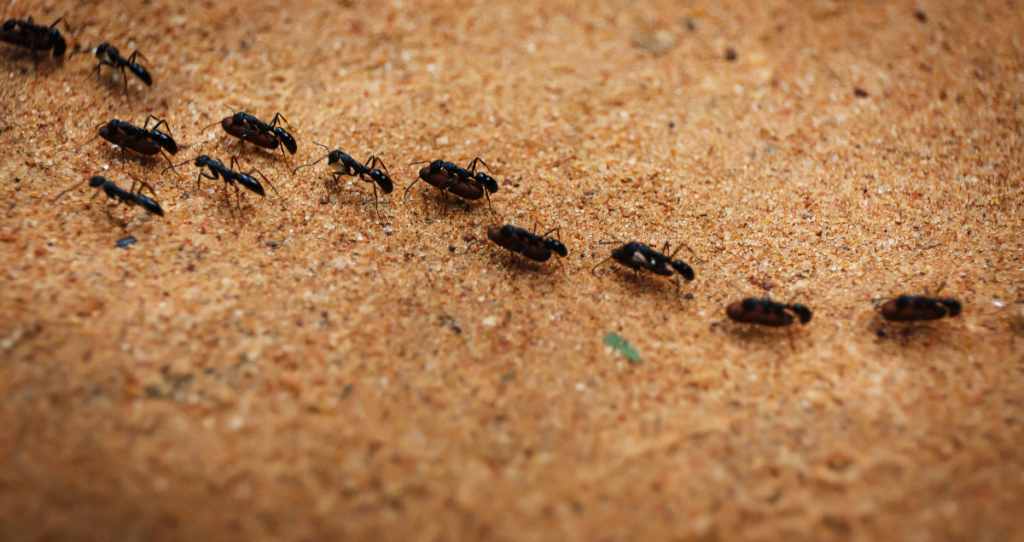
Ants are remarkably good at detecting these traces from a distance. A foraging worker ant that finds a food source returns to the colony and lays a chemical trail back to it and within a short time the trail becomes a constant stream. Food environments attract a wider range of food pests than most businesses account for, but ants are among the most consistently present because the conditions that commercial kitchens create are almost ideal for them.
Black Ants and Pharaoh Ants in Commercial Kitchens
Not all ants behave the same way or respond to the same treatments. In UK commercial kitchens, two species are responsible for the vast majority of problems and telling them apart matters.
Black Garden Ants in Commercial Kitchens
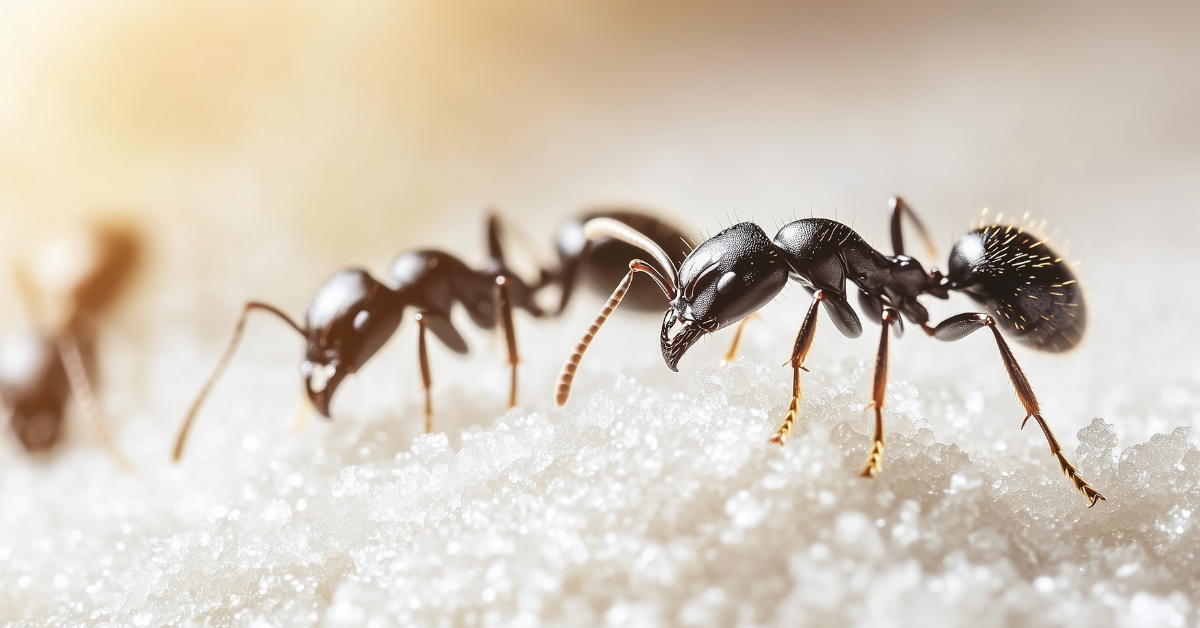
The black garden ant is the most common ant in the UK. It nests outdoors, typically in soil, under paving, or in wall cavities and forages indoors in search of food and water. It’s most active in spring and summer, when worker ants leave the colony to forage across large areas. In a restaurant kitchen or food preparation environment, these ants enter through gaps around doors, pipes and air bricks, following trails to wherever food is available.
Black garden ants don’t carry disease in the way that rodents or flies do, but their presence in a food environment is still a hygiene concern. They travel across floors, drains and surfaces before reaching food or prep areas and their presence during a pest control inspection or audit is recorded as a pest sighting regardless of species.
Pharaoh Ants in Commercial Kitchens
The pharaoh ant is a very different problem and considerably more serious in commercial kitchen environments. Pharaoh ants are tiny, pale yellow and live entirely indoors. They don’t forage from an outside nest. They nest inside the building, in wall voids, behind skirting boards, under appliances, inside electrical equipment and anywhere else that provides warmth and shelter.
Pharaoh ants are associated with food contamination in healthcare and catering environments and are capable of accessing packaged food. They move through buildings along pipe runs and electrical wiring, which means an infestation in one part of a building can spread to others without any visible trail on the surface. They’re also significantly harder to eliminate because of how they respond to treatment, which is covered in more detail below.
How to Prevent Ants in a Commercial Kitchen
Prevention in a commercial kitchen is about removing the conditions that make the space attractive to ants in the first place. No single measure is sufficient on its own, but together they significantly reduce the risk.
Cleaning Behind and Under Equipment
Standard cleaning routines don't typically reach behind large appliances, under fryers, or beneath refrigeration units and these are precisely the areas where food residue accumulates. Regular deep cleaning that covers these spaces removes the food traces that ants are detecting from outside the building. Any spill, residue, or grease build-up that isn't cleaned up becomes a food source for ants and other pests commonly found in commercial kitchens.
Drain Maintenance
Drains are one of the most consistent entry points and foraging areas for ants in commercial kitchens. Organic material builds up in drain channels and traps over time, providing both food and moisture. Regular drain cleaning and maintenance, including checks that drain covers are intact and correctly fitted, reduces this as an attractant and closes off a common access route.
Sealing Entry Points
Ants can enter through very small gaps. Cracks around pipe runs, gaps under exterior doors, damaged air bricks and poorly fitted seals around cables and conduits all provide access. A walk around inspection looking specifically for these gaps, followed by appropriate sealing, is one of the most cost-effective prevention steps available. In an industrial kitchen or large food production facility, the number of potential entry points is greater, making this check more important rather than less.
Waste Management and Bin Areas
Bins positioned close to the building, particularly those without tight-fitting lids, act as a consistent food source for ants foraging from the surrounding area. Moving bin storage away from the building, ensuring lids are always closed and keeping the surrounding area clean significantly reduces the draw for outdoor colonies. Internal bins should be emptied at the end of every service and cleaned regularly to prevent residue build-up inside.
Why DIY Ant Treatment Can Make the Problem Worse
This is the most important point in the blog for anyone managing a commercial kitchen with a pharaoh ant problem. Insecticidal sprays and aerosols, the type available from general retailers, cause pharaoh ant colonies to split. When a pharaoh ant colony detects a threat, it breaks into smaller groups and moves to new locations within the building. This is known as budding and the result is that a single infestation in one area becomes multiple infestations in several areas.
For black garden ants, a surface spray may suppress visible activity for a short period. It won’t address the colony, which remains outside and continues sending ants in. Gel baits carried back to the colony by worker ants are more effective for black ants and are the only appropriate treatment for pharaoh ants. Identifying which species is present before treating is essential, which is another reason why professional assessment is worth seeking before any treatment is applied.
Ants in a Commercial Kitchen Are a Compliance Risk
For any food business, whether a restaurant, a catering operation, or a food manufacturer, ants on site during an Environmental Health inspection or a BRC audit are recorded as a pest finding. The impact depends on the severity and the evidence of what measures are in place, but any active pest activity in a food preparation or storage area is a significant finding.
The Food Safety Act 1990 and associated food hygiene regulations require food businesses to take all reasonable precautions to protect food from contamination. Ants crossing prep surfaces, entering food storage areas, or appearing in a restaurant kitchen during service all represent a potential failure of that duty. A professional pest management programme, with documented inspections and evidence of proactive control measures, is the most reliable way to demonstrate compliance.
When to Call a Professional Pest Controller
If ants are already visible in a commercial kitchen, or if the same trails are appearing repeatedly despite cleaning and proofing measures, it’s time to bring in professional help. A pest controller will identify the species, locate the likely nest site or entry point and apply the right treatment for the situation. For pharaoh ants in particular, professional treatment is not optional. DIY products will make the problem worse.
MJ Backhouse Pest Control provides commercial pest control across Yorkshire, covering restaurant pest control, food production, hospitality and commercial kitchen environments. The common pests in commercial kitchens blog covers ants alongside the other pest risks that commercial kitchens most commonly face and is definitely worth reading alongside this one.
Getting on top of ants in a commercial kitchen comes down to understanding what’s drawing them in and responding correctly once they’re there. The two species most likely to cause problems in UK kitchens behave very differently and the gap between the right and wrong treatment approach is significant, particularly with pharaoh ants where an incorrect product can turn one problem into several.
MJB Pest Control has been working with food businesses across Yorkshire for over 35 years. To arrange a survey or put a prevention programme in place, call 0800 542 6359 or get in touch with the team today.
Contact us
If you’re looking for a professional and dependable pest control partner for your business, MJB Pest Control is here to help. Contact us today to discuss your specific needs and find out how we can help keep your premises pest-free.