What Are Stored Product Insects?
Stored product insects, often referred to as food pests or food insects, are a group of beetles, moths and weevils that infest and damage stored food products. Unlike pests that are simply attracted to food as an occasional food source, stored product insects breed inside food, completing part or all of their life cycle within the product itself. This makes them particularly difficult to detect early and particularly damaging to food stock.
The term covers a wide range of species, but what they all have in common is that they target dry, stored goods. Cereals, flour, rice, pasta, dried fruit, nuts, spices, chocolate, pet food, grain, seeds and animal feed are all at risk. Any food business with a storage facility, any farm with a grain store, any food manufacturer with raw material stock and any retailer holding dry goods is a potential target.
The Most Common Stored Product Insects in the UK
Grain Weevils
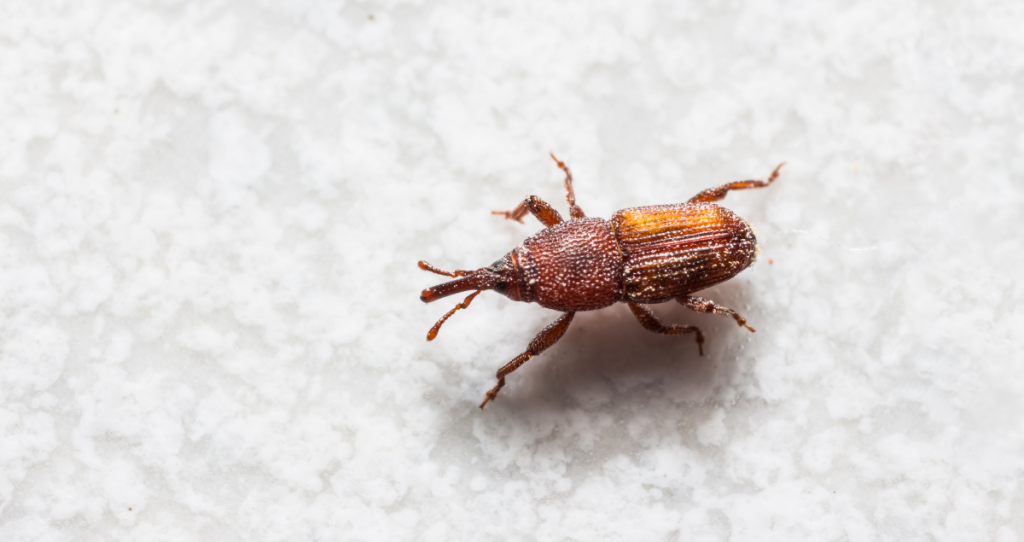
Grain Weevils The grain weevil (Sitophilus granarius) is one of the most economically damaging stored product insects in the UK. Adults are small, around 3 to 4mm long, with a characteristic elongated snout and a hard, dark brown to black shell. They infest whole cereal grains including wheat, barley, rye, oats and maize. Grain weevils are particularly difficult to detect in the early stages of an infestation, as their lifecycle takes place concealed within individual grain kernels. This means contamination can become well established before any visible signs appear. Heavily infested stores may develop a distinctive musty odour, and grain quality deteriorates rapidly, resulting in significant economic losses for producers and storage facilities alike.
Flour Beetles
The confused flour beetle (Tribolium confusum) and the red flour beetle (Tribolium castaneum) are among the most widespread food pests in flour mills, bakeries and food storage facilities. Despite the name, they infest a wide range of products including flour, cereals, dried fruit, nuts, spices and dried meat. Adults are reddish-brown, around 3 to 4mm long and are extremely resilient, capable of surviving in low-moisture environments and tolerating temperatures. Their presence in flour produces a characteristic grey tinge and unpleasant smell as the product becomes contaminated with shed skins, waste and dead insects.
Indian Meal Moth
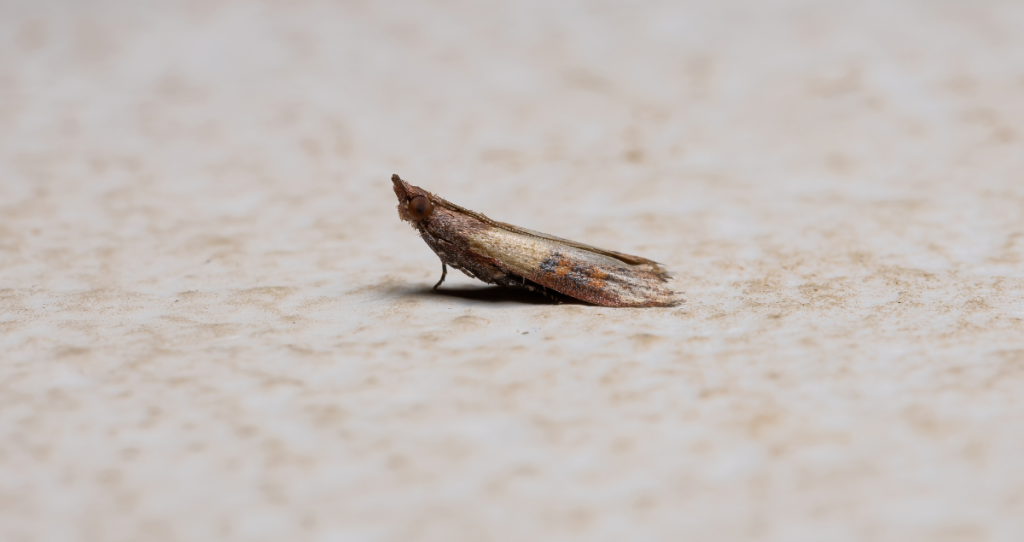
The Indian meal moth (Plodia interpunctella) is the most commonly encountered stored product moth in the UK and is a serious pest in food manufacturing, retail and warehousing. The adult moth has distinctive copper-coloured outer wings with a pale grey band near the head and is around 8 to 10mm in length. The larvae are the damaging stage, spinning silk threads through infested stock as they feed, which clumps the product together and renders it unfit for sale or use. They infest a wide range of dried goods including cereals, nuts, dried fruit, chocolate, spices and pet food.
Biscuit Beetle
The biscuit beetle (Stegobium paniceum) is a small, reddish-brown beetle around 2 to 3mm long that infests a surprisingly wide range of food products. Despite its name, it attacks not only biscuits and other bakery products but also flour, cereals, spices, dried herbs, chocolate, dried fruit and even pharmaceutical products. Its tolerance for spices and aromatic foods makes it a particular problem in food manufacturing environments handling flavouring ingredients. The larvae develop inside the food product, making early detection difficult without close inspection of stock.
Saw-Toothed Grain Beetle
The saw-toothed grain beetle (Oryzaephilus surinamensis) is named for the six distinctive saw-like projections on either side of its thorax. It's a flattened beetle around 2.5 to 3mm long that can squeeze through very small gaps in packaging and is commonly found in cereals, flour, dried fruit, nuts, sugar and pasta. Unlike grain weevils, it doesn't tunnel inside whole grains but feeds on the surface of damaged or milled products. It's a fast mover once established and can spread quickly through a storage facility.
Why Stored Product Insects Are a Serious Problem for Food Businesses
When stored product insects are found in a food business, the costs fall into two categories. The direct costs are significant: condemned stock, deep cleaning, specialist pest treatment and the disruption of taking a facility out of use during treatment. The indirect costs can be considerably higher. An Environmental Health inspection that finds active pest activity, or monitoring records showing a problem during a third-party audit, can put BRCGS or SALSA certification at risk. Losing that certification can interrupt customer contracts and affect a business’s ability to supply major retailers, often at very short notice. Getting ahead of a stored product insect problem is nearly always cheaper than dealing with the consequences of one that’s been found during an audit.
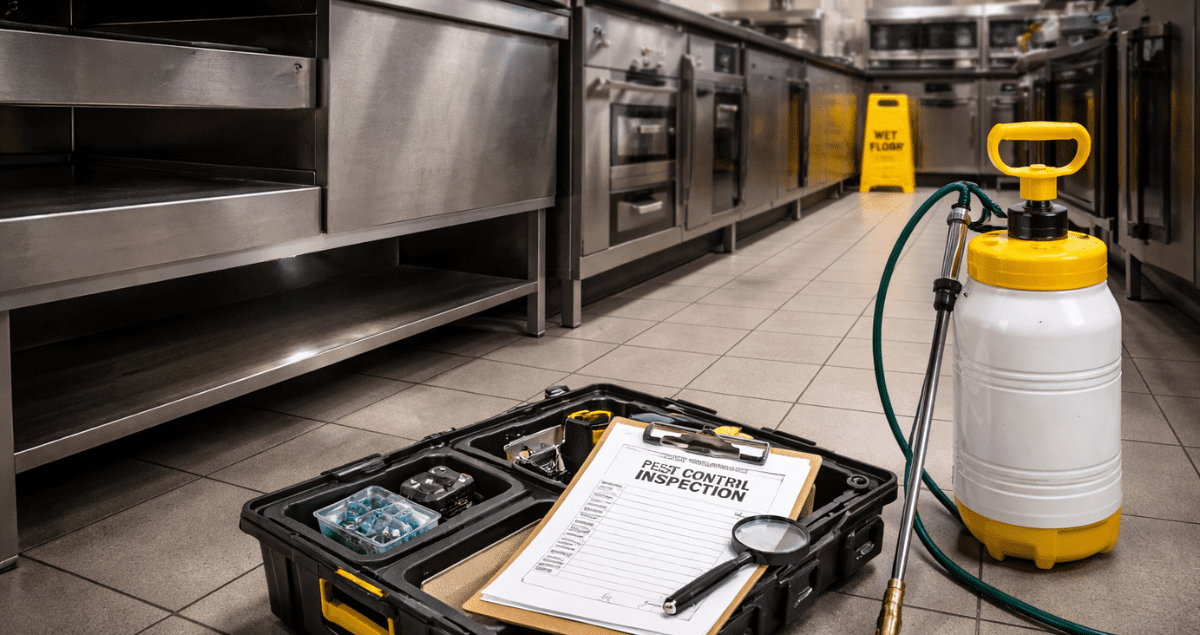
The food sector pest control service MJB provides is built around exactly these compliance pressures, covering regular inspections, monitoring and across Yorkshire.
How to Prevent Stored Product Insects in a Food Business
Prevention starts with three things: controlling what comes in, controlling the environment and maintaining the building. Every incoming delivery should be inspected for signs of pest activity before it enters storage. Stock should be rotated consistently so that older product doesn’t sit undisturbed at the back of a racking system. Storage temperatures and humidity should be monitored and kept within ranges that don’t favour pest development where possible.
The physical building matters as much as the stock management. Gaps in walls, floors and ceilings, cracks around pipework, poorly fitted door seals and damaged or missing vent covers all create routes for insects to enter. Pheromone traps and sticky monitoring traps placed in storage areas provide an early warning system that can identify low-level pest activity before it becomes a visible infestation, which is why monitoring should be a consistent part of any food business’s pest management plan rather than something that only happens when a problem is suspected.
Food businesses that deal with stored product insects reactively almost always spend more, lose more stock and face greater compliance risk than those that manage the threat proactively. The species covered in this guide are well established in UK food environments and the conditions that allow them to thrive are present in most storage facilities. Knowing what to look for and having the right monitoring and management measures in place is what makes the difference between catching a problem early and discovering it during an audit.
To arrange an inspection or discuss a pest management plan for your business, call MJB Pest Control on 0800 542 6359 or contact the team to arrange a site.
Contact us
Whoever the responsibility falls to, if you’re a landlord or a tenant dealing with pest control for rental properties in Yorkshire, get in touch with MJ Backhouse for your pest control needs.