Do Moles Hibernate in the UK?
No. Moles do not hibernate at any point during the year. Unlike hedgehogs or dormice, moles have no ability to store fat reserves large enough to sustain them through a period of inactivity. They need to eat regularly to survive, which means they remain active every day of the year, regardless of the season.
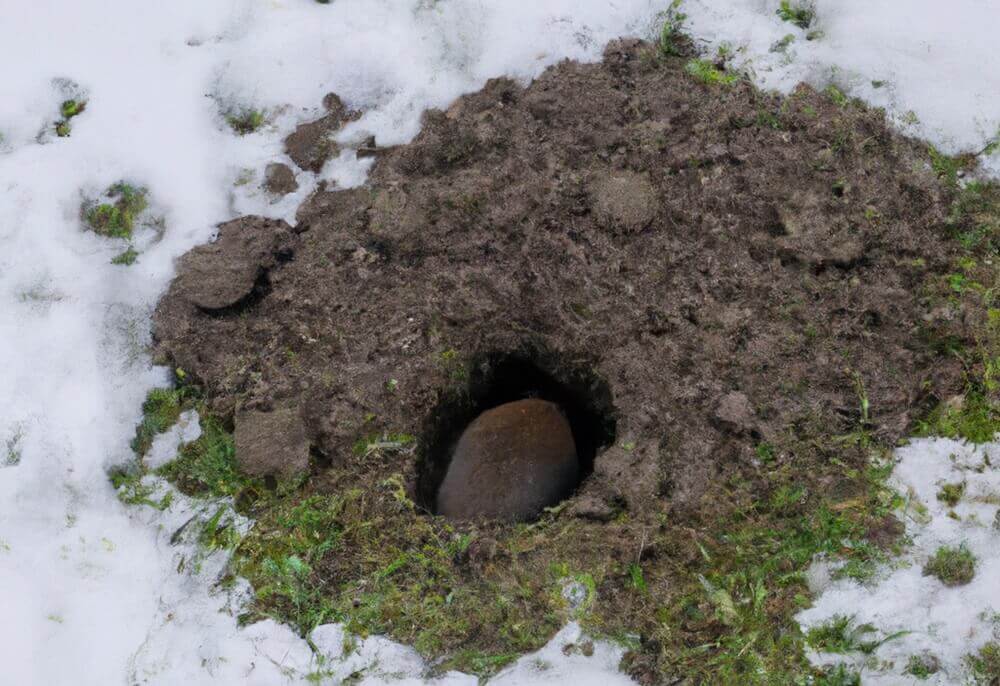
The reason mole activity appears to drop in winter is not because the moles have gone anywhere. It is because they have gone deeper. The surface activity that makes mole damage so visible, including fresh molehills, the raised tunnels, the disturbed turf, becomes less obvious when moles move down into the subsoil to follow their food supply. The problem is still there. It is just harder to see.
What Do Moles Do in Winter?
Why Moles Dig Deeper in Winter
When temperatures drop and the ground surface freezes or hardens, moles respond by tunnelling deeper into the soil where conditions remain softer and warmer. These deeper tunnels serve as both foraging routes and winter quarters. A mole may be working two to three times as deep as it would in spring or summer, which is why the surface signs disappear without the mole having gone anywhere.
The tunnelling itself does not stop. A single mole can excavate at a rate of up to four metres per hour and while winter activity may be slightly reduced compared to the warmer months, the tunnel network continues to expand beneath the surface. Damage that is invisible in January can reveal itself dramatically when the ground thaws in spring.
What Do Moles Eat in Winter?
Moles are insectivores and their diet consists almost entirely of earthworms, with slugs and insect larvae making up the remainder. Earthworms don’t disappear in winter… they simply move deeper into the soil to avoid the cold and the mole follows them down. That’s what makes mole hibernation biologically impossible: the food source never completely disappears, so the mole has no reason and no ability to stop eating.
A mole needs to eat at least half its body weight in worms every day, which means the tunnelling never stops either. That level of continuous foraging requires a constantly expanding tunnel network and everything above that network is being undermined throughout the year.
Are Moles Active All Year Round?
Mole Activity in Winter
Surface activity is at its lowest, but subsurface tunnelling continues. Fresh molehills may be less frequent or absent, but the tunnel network is expanding below ground. This is often when land managers mistakenly assume the problem has gone away.
Mole Activity in Spring
As the ground warms and earthworms rise closer to the surface, mole activity becomes dramatically more visible. This is also the breeding season, running from roughly February to June, when males travel above ground to find mates and new moles begin establishing their own territories. Molehills and raised surface runs reappear and the extent of the winter tunnelling becomes clear.
Mole Activity in Summer
Mole activity remains high through the summer months. Food is abundant, conditions are good and young moles from the spring breeding season are establishing their own tunnel systems. This is typically when the surface damage is most visible and most disruptive.
Mole Activity in Autumn
Moles continue to be active as they build up their tunnel networks ahead of winter. Food stores of worms are cached in underground areas during this period, providing a reliable food supply during the colder months. Activity begins to move deeper as temperatures drop.
How Long Do Moles Live?
The lifespan of a mole in the wild is typically between three and five years, though many do not survive beyond their first winter. Males tend to have a slightly shorter mole lifespan than females due to the additional risks taken during the breeding season, when they travel above ground.
A mole that has established a territory and a well-developed tunnel system will defend it aggressively. The tunnel network a single mole builds over its lifetime can extend hundreds of metres and that infrastructure often remains in use by successive occupants even after the original mole has died. Treating a mole problem is therefore not just about removing the animal. It is about understanding that the tunnel system itself remains an invitation for re-colonisation.
The Damage Moles Cause to Commercial Land and Grounds
For commercial land managers, mole activity is not a minor inconvenience. The damage caused by a single mole working through a season can be significant and an unaddressed infestation over multiple seasons can cause lasting structural damage to the land, soil stability and drainage.
Mole Damage on Farms and Agricultural Land
On agricultural land, moles create a range of serious problems. Molehills contaminate silage and hay with soil when grass is cut, which can introduce listeria and other pathogens into livestock feed. Tunnelling disrupts root systems and destabilises pasture and the soil thrown up by molehills can damage grass cutting machinery. On land used for growing crops, tunnelling disturbs seedbeds and can cause waterlogging by breaking up drainage channels. The damage to crop yields and feed quality can translate directly into financial loss.
Mole Damage on Golf Courses and Sports Grounds
Mole activity on golf courses, sports pitches and equestrian facilities represents both a maintenance cost and a safety risk. On a football or rugby pitch, raised tunnels and hidden sunken ground create ankle and knee injury risks for players. On equestrian land, mole tunnels and molehills can cause horses to stumble, with potentially serious consequences for both animal and rider.
Mole Damage on Commercial and Managed Grounds
Any commercial property responsible for maintained grounds, including business parks, hotels, heritage properties, cemeteries and public open spaces, faces both the practical cost of mole damage to turf and the reputational impact of visibly poor grounds maintenance. MJB’s mole pest control service covers all these settings across Yorkshire.
Why You Should Not Ignore Moles in Winter
The most common mistake land managers make with moles is to treat winter as a period of natural pause. The surface signs may be reduced, but the tunnelling continues and the damage accumulates. By the time visible activity returns in spring, the underground network may have extended considerably, making the problem harder and more costly to address.
Professional mole control is most effective when carried out proactively rather than reactively. Trapping requires knowledge of the active tunnel system and identifying those tunnels is easier when the damage has not already spread across a large area. Waiting until spring, when moles are breeding and actively expanding their territories, consistently means more animals to deal with and more damage already done. The guide to preventing moles covers what land managers can do to reduce the risk, though for any established infestation professional treatment is always the most reliable route.
How to Get Rid of Moles on Commercial Land
If moles are active on your agricultural property in Yorkshire, the most effective course of action is professional trapping carried out by an experienced pest controller. Humane mole traps, correctly positioned in active tunnels, are the most reliable method of control and this is the approach we at MJB Pest Control use as a first option. Gassing techniques are available where the scale of the infestation or the nature of the land makes trapping impractical and where regulatory conditions permit.
DIY mole traps are rarely effective without the specialist knowledge needed to identify and correctly set them in the right part of the tunnel system. Repellent devices and deterrents have no consistent evidence base and are not a reliable solution for commercial land. For any premises with a mole problem, professional treatment through MJB’s commercial pest control service is the most time and cost-effective option.
Moles are active every day of the year and the damage they cause doesn’t pause just because the surface signs do. By the time the molehills reappear in spring, the underground network has often expanded considerably over winter, making the problem harder and more costly to deal with than it would have been a few months earlier.
For farms, golf courses, sports grounds and any commercial property responsible for managed land across Yorkshire, MJ Backhouse Pest Control provides professional mole control throughout the year. Call 0800 542 6359 or get in touch with the team to arrange a survey.
Contact us
If you’re looking for a professional and dependable pest control partner for your business, MJB Pest Control is here to help. Contact us today to discuss your specific needs and find out how we can help keep your premises pest-free.