Every spring, searches for love bugs spike. People want to know what they look like, whether they bite and whether they exist in the UK. The lovebug is an interesting insect, but for UK businesses it is mostly a curiosity rather than a concern. What is worth paying attention to, though, is the broader pattern: as temperatures rise, flying insects become active and some of them are a serious problem for commercial premises.
What Are Love Bugs?
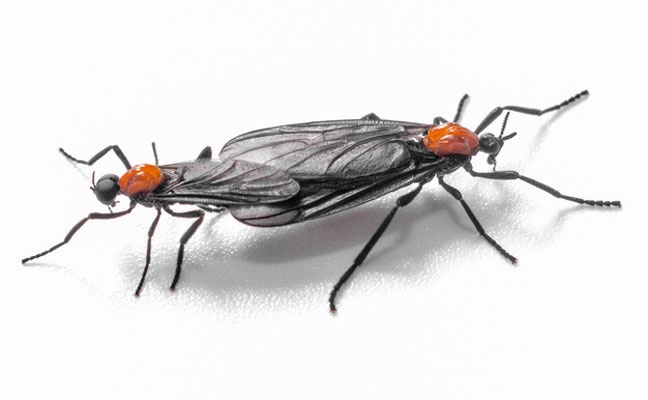
The lovebug (Plecia nearctica) is a type of fly found in Central America and the southeastern states of the US, particularly Florida, Texas, Louisiana, Alabama and Mississippi. It gets its name from the way it mates: once a male and female pair up, they stay joined end-to-end for up to several days, even while flying. That is also why they are sometimes called the double-headed bug or the honeymoon fly.
Love bugs are small, around 6 to 9mm long, with a black body and a red or orange patch just behind the head. They swarm twice a year, in spring and late summer and are most active during the middle of the day. Despite how dramatic the swarms look, they do not bite, do not sting and pose no health risk to people or animals.
For most of the year, the larvae live in the soil and feed on dead vegetation, which makes them useful to the environment. The main issue they cause is for drivers. Large swarms along highways leave windscreens and radiators covered in insects and the slightly acidic chemistry of dead love bugs can damage car paint if left on for too long.
Are Love Bugs Found in the UK?
No. Love bugs need the warm, humid conditions of the Gulf Coast to survive and breed. UK weather does not support them and there is no established population here. If you have come across the name during a search and wondered whether they are something to be concerned about, they are not.
That said, the lovebug story is a good illustration of what happens when flying insects find the right conditions. They multiply quickly, they appear in significant numbers and by the time people notice them it can already be a problem. That dynamic is very relevant in the UK, just with different species.
Are Love Bugs Found in the UK?
No. Love bugs need the warm, humid conditions of the Gulf Coast to survive and breed. UK weather does not support them and there is no established population here. If you have come across the name during a search and wondered whether they are something to be concerned about, they are not.
That said, the lovebug story is a good illustration of what happens when flying insects find the right conditions. They multiply quickly, they appear in significant numbers and by the time people notice them it can already be a problem. That dynamic is very relevant in the UK, just with different species.
The Flying Insects UK Businesses Should Be Watching For This Spring
As the weather warms up through spring and into summer, flying insect activity picks up noticeably across the UK. For commercial premises, particularly in food service, hospitality, healthcare, retail and warehousing, that means real pest pressure. The businesses that handle it best are the ones that have measures in place before the season starts, not after they have spotted a problem.
Cluster Flies Coming Out of Hibernation
Cluster flies spend winter hibernating inside buildings, usually in roof voids, wall cavities and the upper floors of properties near fields or open land. They don’t cause the kind of contamination risk that house flies do, but as temperatures rise through March and April they emerge in large numbers and that volume is the problem. For hotels, offices and any business with customer-facing spaces, a significant cluster fly emergence can be very difficult to manage quickly.
House Flies and Bluebottles in Food Businesses
House flies and bluebottles are the flying insects that create the most serious problems for food businesses. They carry bacteria including Salmonella, E. coli and Listeria, picking them up from waste and contaminated surfaces and dropping them onto food, equipment and preparation areas. So, these are a direct contamination risk with consequences that include failed Environmental Health inspections, improvement notices and in serious cases forced closure. For any premises handling or serving food, fly control is not something that can wait until flies are already visible. Electric fly killers, fly screens and proper waste management all need to be in place before the warm weather arrives.
Fruit Flies and Drain Flies in Catering and Hospitality
Fruit flies are tiny and easy to underestimate, but in a warm catering kitchen they reproduce fast enough for a small problem to become a visible infestation in a matter of days. They are drawn to anything fermenting or decomposing, including overripe fruit, residue in bins, spilled drinks and damp cloths. Getting on top of them properly means finding and removing every source, which is harder than it sounds.
Wasps Starting to Build Nests
Queen wasps come out of hibernation in early spring and start looking for a nest site straight away. By the time a wasp nest is causing obvious problems, usually mid to late summer, it can already hold thousands of workers. At that point, treatment is more complex, more disruptive and more urgent. For businesses with outdoor areas, food service, or delivery operations, a large active wasp nest is definitely operational and safety issue. Dealing with it earlier in the year, while the nest is still small, is considerably more straightforward. Our commercial pest control team covers wasp nest treatment across Yorkshire and can respond quickly when it is needed.
Why Flying Insects Are More Than Just a Nuisance for Businesses
A couple of flies in a warm office is annoying. In a commercial food environment, the same situation carries regulatory weight. Food businesses are inspected by Environmental Health officers and many are subject to third-party audits through bodies like the British Retail Consortium and SALSA. Evidence of fly activity during an audit or inspection, can affect certification, trading status and the ability to supply certain customers. MJB’s pest control for the food industry is built around exactly these compliance pressures.
The same applies well beyond food. Flying insects in a healthcare setting, a hospitality venue, or a retail premises all carry reputational consequences. A single incident visible to customers or auditors can cause more commercial disruption than a year of proactive pest control would have cost. For offices and other professional environments, the expectation from staff and visitors is the same… a clean, pest-free space.
Love bugs are not something UK businesses need to worry about, but the questions people ask about them every spring reflect a real pattern. Flying insects pick up as the weather warms and for commercial premises the consequences of getting caught out are often more serious than businesses expect. Cluster flies, house flies, fruit flies, drain flies and wasps all become active through spring and summer and dealing with them proactively is always cheaper and easier than reacting once a problem is established.
MJB Pest Control has been working with businesses across Yorkshire for over 35 years. To put a flying insect control plan in place before the season gets going, call 0800 542 6359 or get in touch with the team today.
Contact us
If you’re looking for a professional and dependable pest control partner for your business, MJB Pest Control is here to help. Contact us today to discuss your specific needs and find out how we can help keep your premises pest-free.