Signs That Rats Are Still Active on Your Premises
The most reliable way to confirm whether rats are still present is to look for the signs they leave behind. A reduction in one type of evidence doesn’t mean all evidence will have disappeared.
Fresh Rat Droppings
Rat droppings are one of the most consistent indicators of active infestation. Fresh droppings are dark, moist and soft to the touch, whereas older droppings dry out, become paler and are harder and more brittle. If you're finding only old, dry droppings and no fresh ones, that's an encouraging sign, but it's not confirmation the rats have gone. They may simply have shifted their activity to a different part of the premises. Focus inspection on areas close to food sources, water, heat and entry points, as these are where rat activity concentrates. Similar signs apply to mice infestations, which can occur alongside or independently of rats on the same premises.
Sounds of Movement
Rats are most active at night and the sounds of movement, including scratching, gnawing, or scurrying in roof voids, wall cavities and behind fitted units, are a reliable indicator that they're still present. In commercial premises, noise is often the first sign staff notice, particularly in roof voids and wall cavities where rats frequently nest. An absence of noise is not itself confirmation that rats have gone, since a smaller population may simply be less audible, or activity may have moved to a less accessible part of the building.
Gnaw Marks and Structural Damage
Rats need to gnaw constantly to keep their teeth worn down, so gnaw marks on cables, pipework, woodwork and packaging are a consistent sign of activity. Fresh gnaw marks have a lighter, rawer appearance than older ones, which tend to darken and smooth over time. New damage appearing on top of older damage is a clear sign that rats are still active, even if other signs are less obvious
Tracks and Grease Marks
Rats follow the same routes repeatedly, running along walls and the edges of rooms rather than crossing open floors. Over time, their fur leaves a dark, greasy smear mark along these regular routes and in dusty areas their footprints and tail drag marks can be seen clearly. Established smear marks that aren't being refreshed suggest reduced activity, but they remain on surfaces for a long time after rats have gone, so they can't be relied on as current evidence on their own.
Bait Being Taken
If bait is being taken consistently and then stops, this can indicate that the rat population has reduced. It can also indicate bait shyness, where rats become wary of baiting points following disturbance. Monitoring bait levels over time, alongside other signs of activity, gives a more complete picture than any single indicator.
Signs That Rat Activity Is Reducing
A combination of signs rather than any single indicator gives the clearest picture of whether rat activity is reducing. No new gnaw marks appearing, droppings drying out and not being replaced by fresh ones, bait stations no longer being visited and an absence of noise over several consecutive nights are all positive signs. None of them individually confirm that the rats have gone, but together they suggest that the population is either gone or significantly reduced. A follow-up professional inspection is the only reliable way to confirm the infestation has been cleared.
Will Rats Leave If There Is No Food?
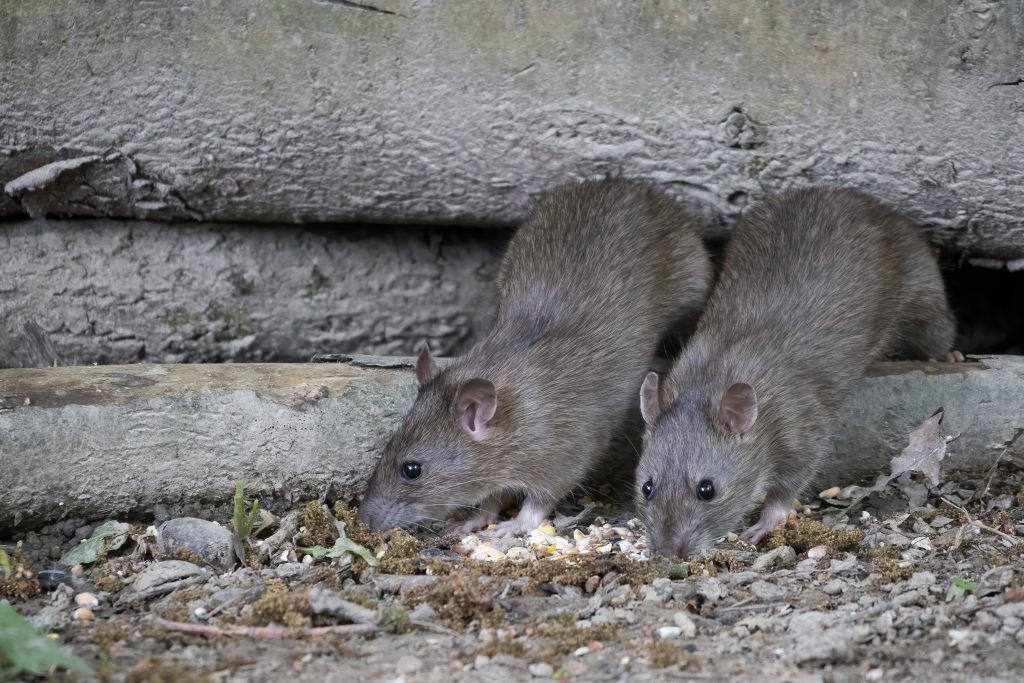
Yes, rats will move on if a food source is removed, but removing food alone rarely resolves a serious infestation. Rats are highly adaptable and resourceful and a population that has established itself with access to water, warmth and shelter will not necessarily leave simply because one food source has been cut off. They’ll seek out another. In urban and industrial environments, food sources are rarely completely removed, which is why rats that have established themselves on a premises tend to persist unless the infestation is actively treated rather than simply managed through hygiene improvements alone.
Good waste management, secured bins, clean food storage and removal of unnecessary clutter that provides shelter are all important in reducing rat pressure and supporting treatment, but they’re not a substitute for professional pest control where an infestation is established.
How Many Rats Are in a Nest?
A rat nest typically contains between three and seven adult animals, though this varies depending on the stage of the breeding cycle and the size of the population. Females can produce litters of six to twelve and young rats reach sexual maturity in as little as five weeks, meaning a small number of animals can become a large population remarkably quickly. A single breeding pair can theoretically produce hundreds of descendants within a year under favourable conditions, which is why early intervention is always more effective than waiting to see whether the problem resolves itself.

Do Rats Come Back to the Same Place?
Rats have strong instincts and will return to a site where they’ve previously found food, water and shelter, provided those conditions still exist. Relocating rats by trapping them alive and releasing them elsewhere is therefore not an effective long-term solution. Successful rat control requires both treating the active population and addressing the conditions that made the site attractive in the first place, including blocked entry points, secured food storage and managed waste.
Even after a successful treatment, a site that hasn’t been proofed remains vulnerable to reinfestation from neighbouring areas. This is particularly relevant in urban settings, in food processing environments and on agricultural land, where rat pressure from the surrounding area is a consistent ongoing risk.
How Long Do Rat Droppings Remain Infectious?
Rat droppings can remain infectious for a significant period after they’ve been deposited. The bacteria and viruses that rats carry, including Leptospira (which causes Weil’s disease), Salmonella and hantavirus, can persist in dried droppings for days to weeks depending on conditions. This means that even after rats appear to have gone, their droppings remain a health risk until the affected area has been properly cleaned and disinfected. This is particularly important in food preparation and storage areas and is one of the reasons why professional decontamination is recommended following any rat infestation on commercial premises, not just treatment of the animals themselves. The rats and mice pest control service we provide covers treatment, monitoring and follow-up to ensure the premises is safe to return to normal use.

What to Do If You Think Rats Have Gone
If visible rat activity has reduced and you want to confirm whether the infestation has been cleared, the right approach is a professional inspection rather than simply monitoring the situation and hoping for the best. We carry out follow-up surveys as part of every commercial rat and mice treatment, confirming clearance and identifying any residual activity or conditions that could lead to reinfestation.
Where a treatment plan has been completed, a proofing inspection should follow to identify and address the entry points that allowed rats to establish in the first place. A commercial pest control contract that includes regular monitoring visits is the most reliable way to stay ahead of rat activity rather than reacting to it once it’s already visible.
Knowing whether rats have gone requires more than waiting for the obvious signs to stop appearing. Fresh droppings, gnaw marks and sounds of movement are the most reliable indicators of ongoing activity and the absence of these signs needs to be confirmed through inspection rather than assumed.
For commercial premises across Yorkshire, MJB Pest Control provides professional rat treatment, follow-up inspections and proofing advice to confirm clearance and prevent reinfestation. Call 0800 542 6359 or contact the team to arrange a survey.
Contact us
At MJ Backhouse, our rodent pest control service comprises our team of experts who can help provide advice on pest proofing and preventing reinfestation once a treatment plan has been outlined. Get in touch today to find out more about how we can help.